
Planning the IYGU: Weimar 2011
International Year of Global Understanding planning under way
The first meeting of the Steering Committee of the International Year of Global Understanding (IYGU) – sponsored by eh ministry for education and research of the German Federal State Government of Thuringia – took place in the UNESCO World Heritage City of Weimar (Germany) on 4-5 March 2011. The opening session of the meeting was held at the Goethe National Museum.
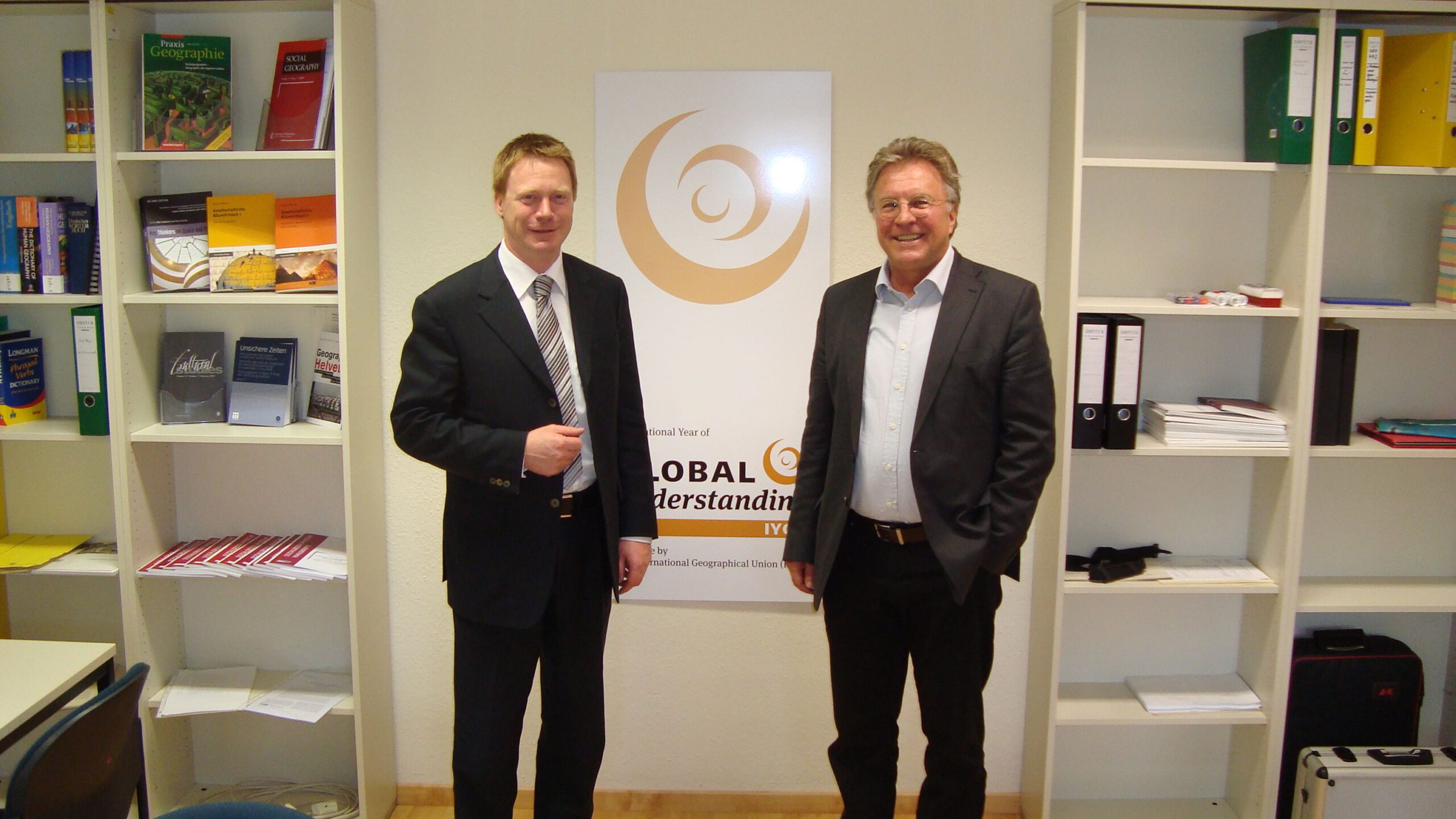
Minister Christoph Matschie visiting the IYGU headquarters ahead of the Weimar Meeting
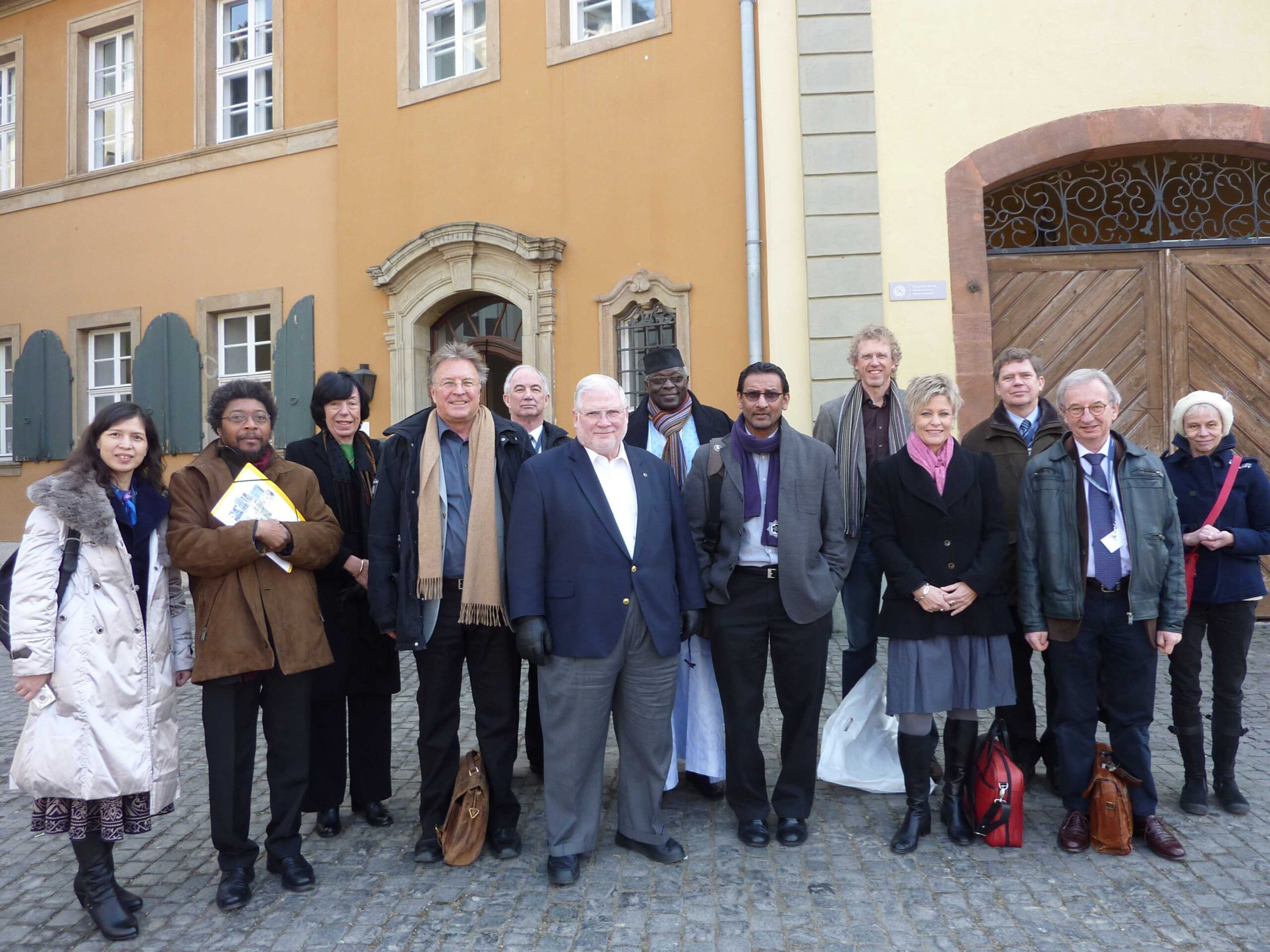
Gruppenfoto
The IYGU is to be a comprehensive, transdisciplinary program aimed at mobilizing the world’s sciences and humanities in a united effort to raise citizen awareness of local people’s capacities to affect natural and social systems on a global scale. Simultaneously, the program is aimed at increasing local and regional pressure on policy makers to adopt global mitigation targets.
The first meeting of the future Steering Committee members was opened with a welcome address by the IGU president, Prof. Ron Abler. Prof. Benno Werlen, the initiator and director of the IYGU, gave a general introduction to the program’s aims and goals. The representatives of the International Social Science Council – ISSC (Secretary General Dr Heide Hackmann via Skype), the International Council for Philosophy and Humanistic Studies – CIPSH (President Adama Samassekou), the International Human Dimensions Programme on Global Environmental Change – IHDP (Director Prof Anantha Duraiappah), the International Councils Scientific Unions – ICSU & Intergovernmental Panel of Climate Change – IPCC (Prof Gordon McBean, ICSU President-Elect and member IPCC) and the IGU (President, Prof. Ron Abler & President-Elect, Prof. Vladimir Kolossov) articulated their expectations regarding contributions to and results expected from the IYGU, as well their potential deliverables to achieve the IYGU’s aims and goals to be coordinated together with the additional members of the IYGU Steering Committee.
To know more:
The IYGU’s substantial focus on everyday activities as a possibility to highlight global change research anew, is regarded as its most important, and perhaps most attractive, aspect. The focus on human agency, responsibilities, beliefs, and interests as they emerge across space and time shall be central. Focusing on the global consequences of local action should be a core issue not only for the IYGU but also for the social sciences as a whole, specifically in the context of global environmental change. Beyond this, the IYGU is seen as an important strategic vehicle to deliver a core set of four imperatives:
Bringing Social Sciences to the Core of Global Change Research
Taking mainstream social sciences to the heart of global change research. The IYGU stresses that global change research is a core part of social sciences and not something peripheral, that social scientific knowledge is central to this issue, and will therefore help the social sciences to use their voice in that crucial scientific endeavor.
Integrating Social and Natural Sciences
Fully integrating the research of the social sciences‘ different parts and disciplines, as well as integrating social and natural scientific perspectives to achieve a cross-disciplinary approach to global change research.
A Truly Global Perspective
Attaining a truly global perspective in order to tackle a global problem from a multiple of socio-geographical and cultural perspectives, thus avoiding the imposition of one part of the world’s models, rules, and concepts on the others. With this effort, the IYGU is expected to mobilize and foster such a global social scientific effort that it will build capacity for real international knowledge production.
Science with Society
Bringing together stakeholders, users, and decision makers to co-design and co-produce knowledge on global change issues. The IYGU can therefore be regarded as a substantial contribution to implementing the paradigm shift to true trans-disciplinary, a shift from „Science for Society“ to „Science with Society.“